THE BRIEF
IAPs are underutilized at Duolingo.
Almost all users engage with the Duolingo shop out of necessity — whether a streak is lost, more energy is needed to complete lessons, or a boost is needed to clear a level. Only 11% of users visit the shop per month, with less than 30% of visitors purchasing an item.
With support from my intern host Kaila, I created DuoHomes, a new set of IAPs to promote learning and monetization.
the critical loop
SOLUTION
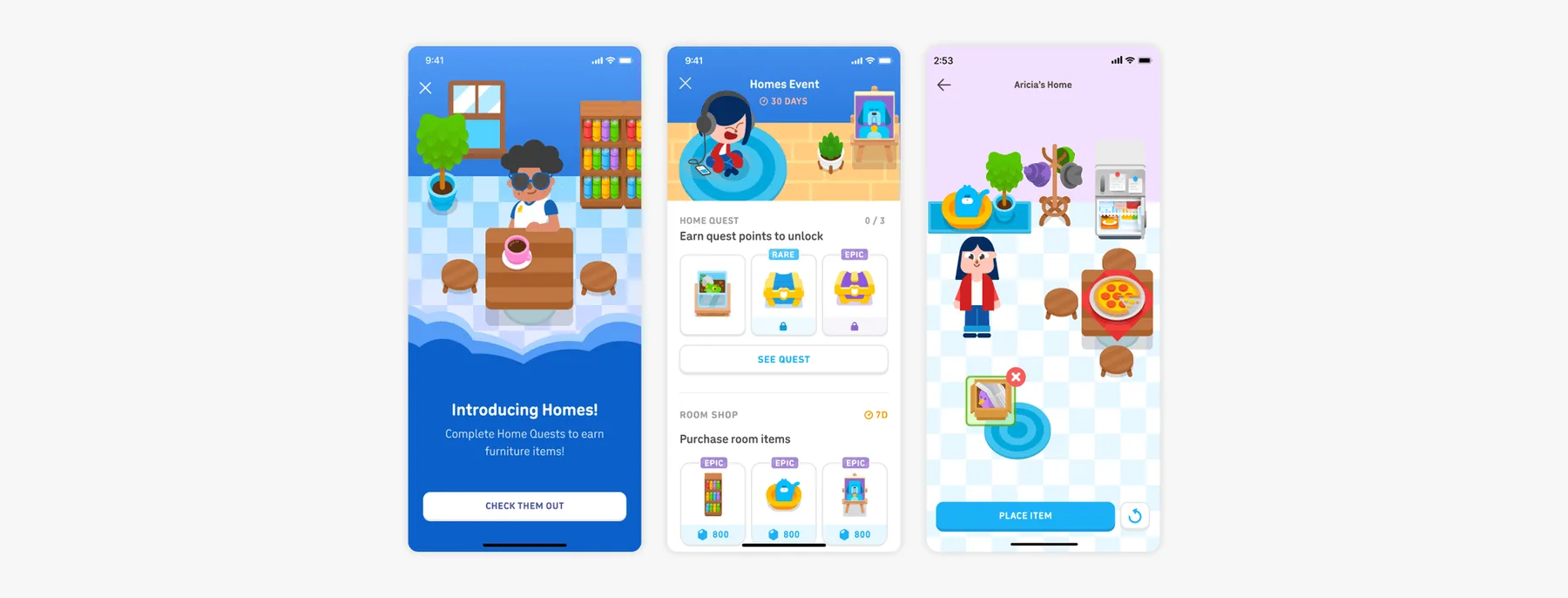
DuoHomes allows users to collect furniture and decorate their rooms.
DuoHomes is a space for players to customize their room by collecting furniture. Every week a rotating shop features 9 items — 3 epic and 6 rare. Players can then earn a random item from the shop by completing home quests, or purchase a specific item immediately.
Add furniture items, adjust the floor and wall style
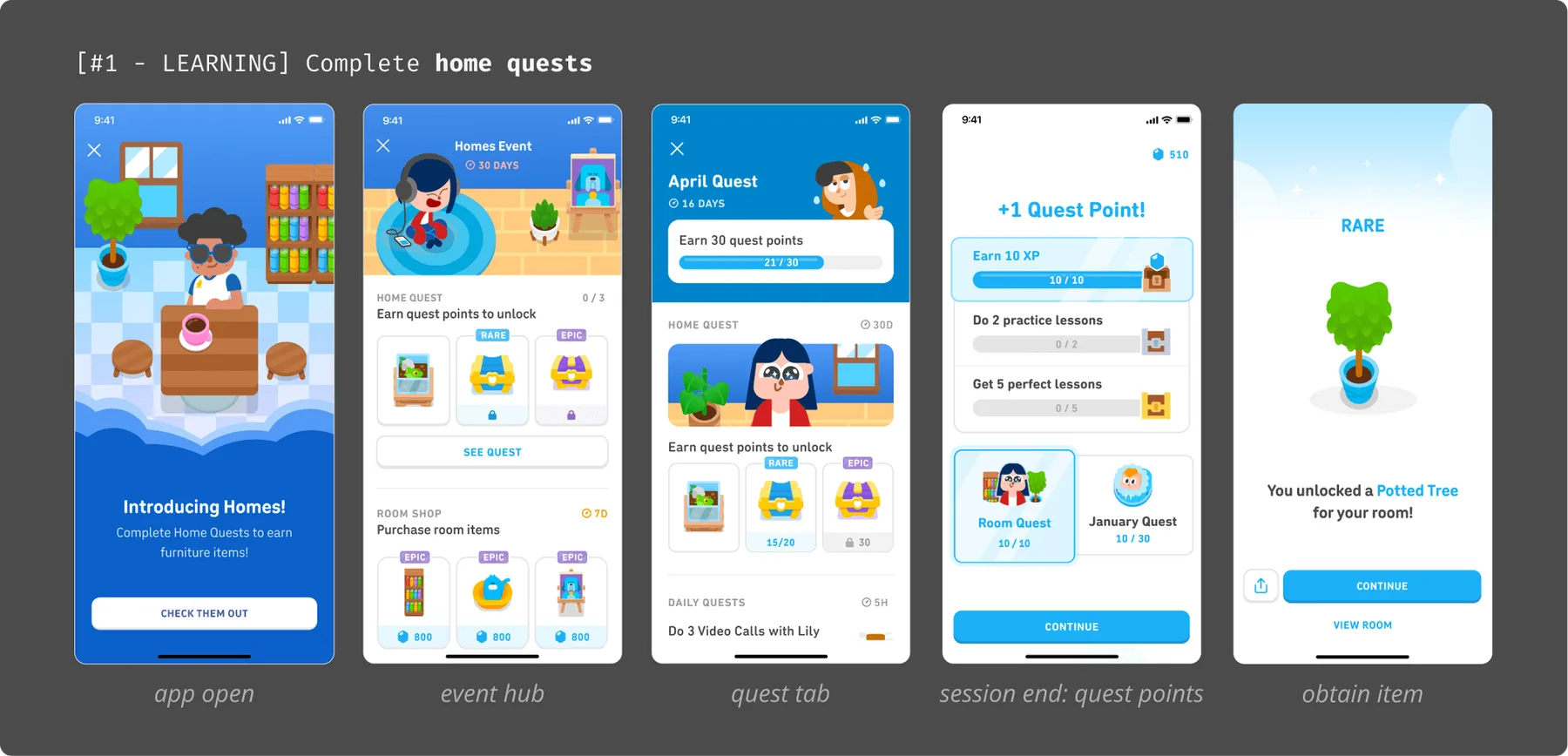
Earn 10 quest points to earn a random item from the shop. Purchase a specific piece from the shop.
Check out your friends rooms from the path to stay updated on learning progress!
RESEARCH & BLUE SKY
IAPs are designed to drive revenue. At Duolingo, they have the added responsibility of supporting learning.
All items within the DuoShop are purely functional. Taking a look at other apps, I realized that IAPs don't need to purely functional, they could be social or cosmetic as well. With this in mind, I drew several conclusions about successful in-game items.
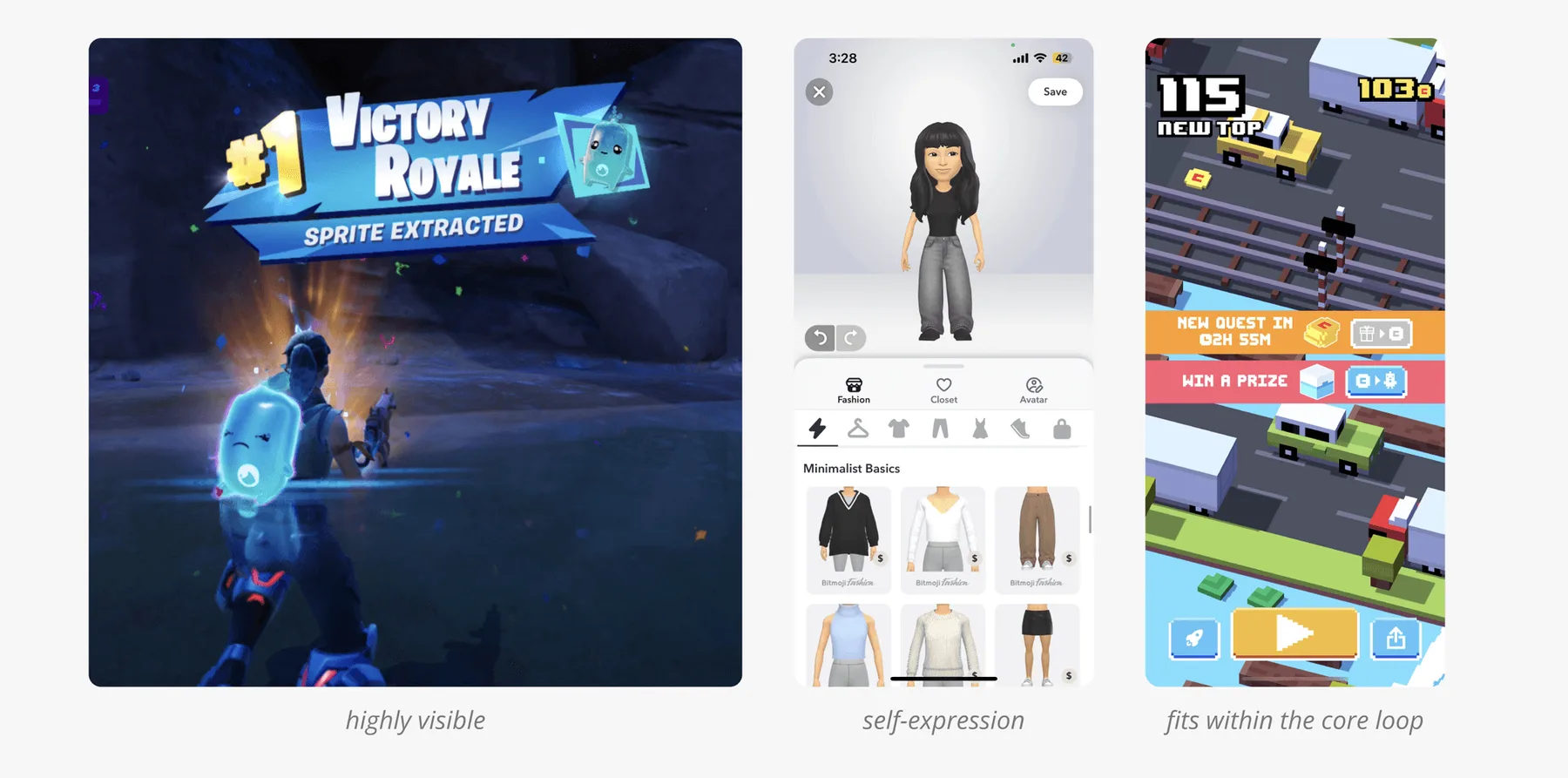
Blue sky IAPs
After a blue sky brainstorming session, I made lo-fi prototypes of four ideas:
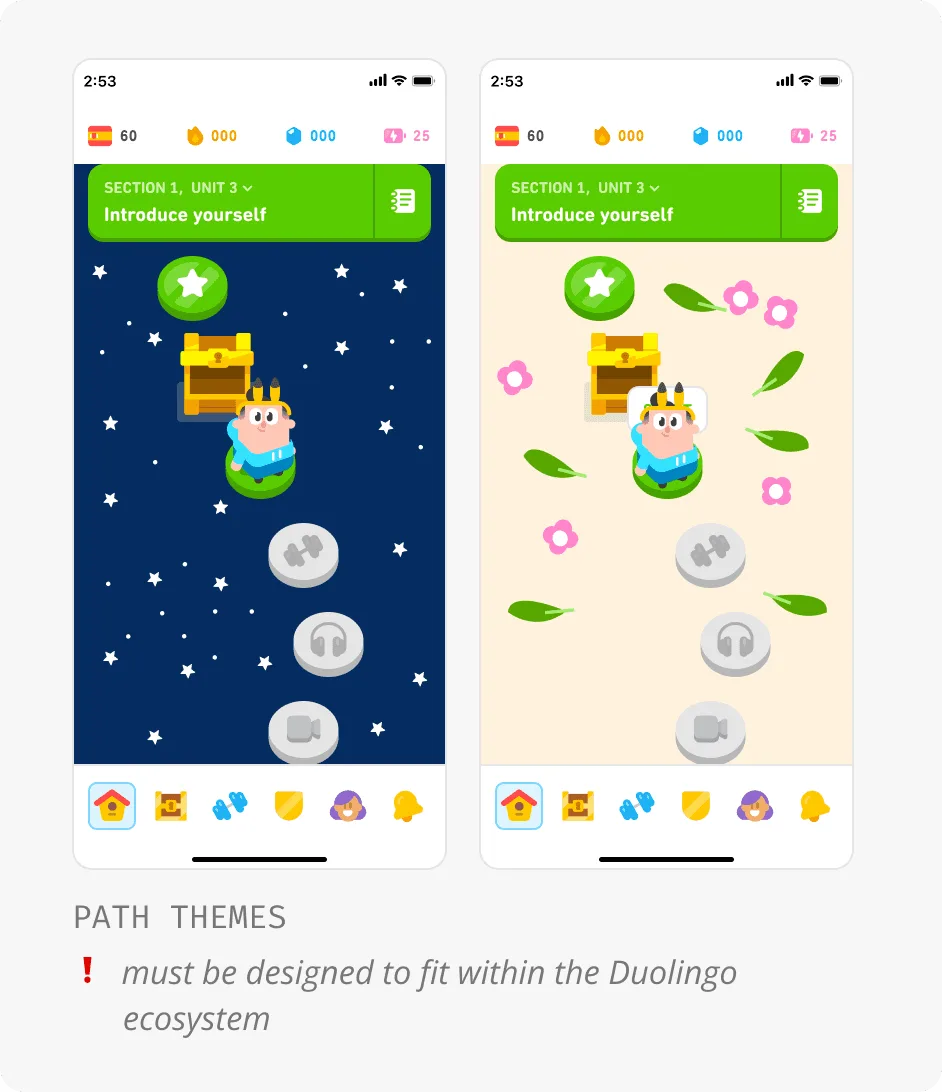
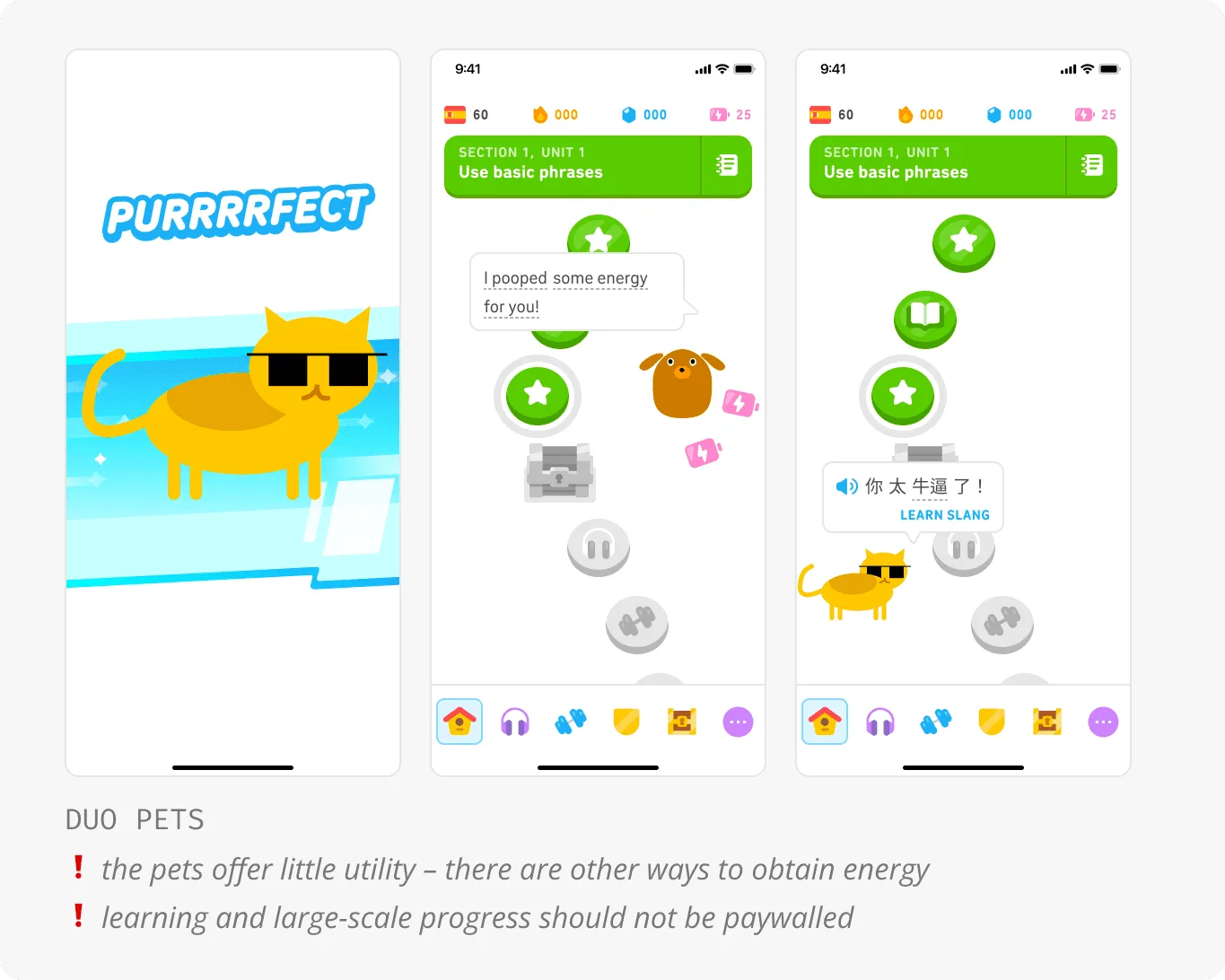
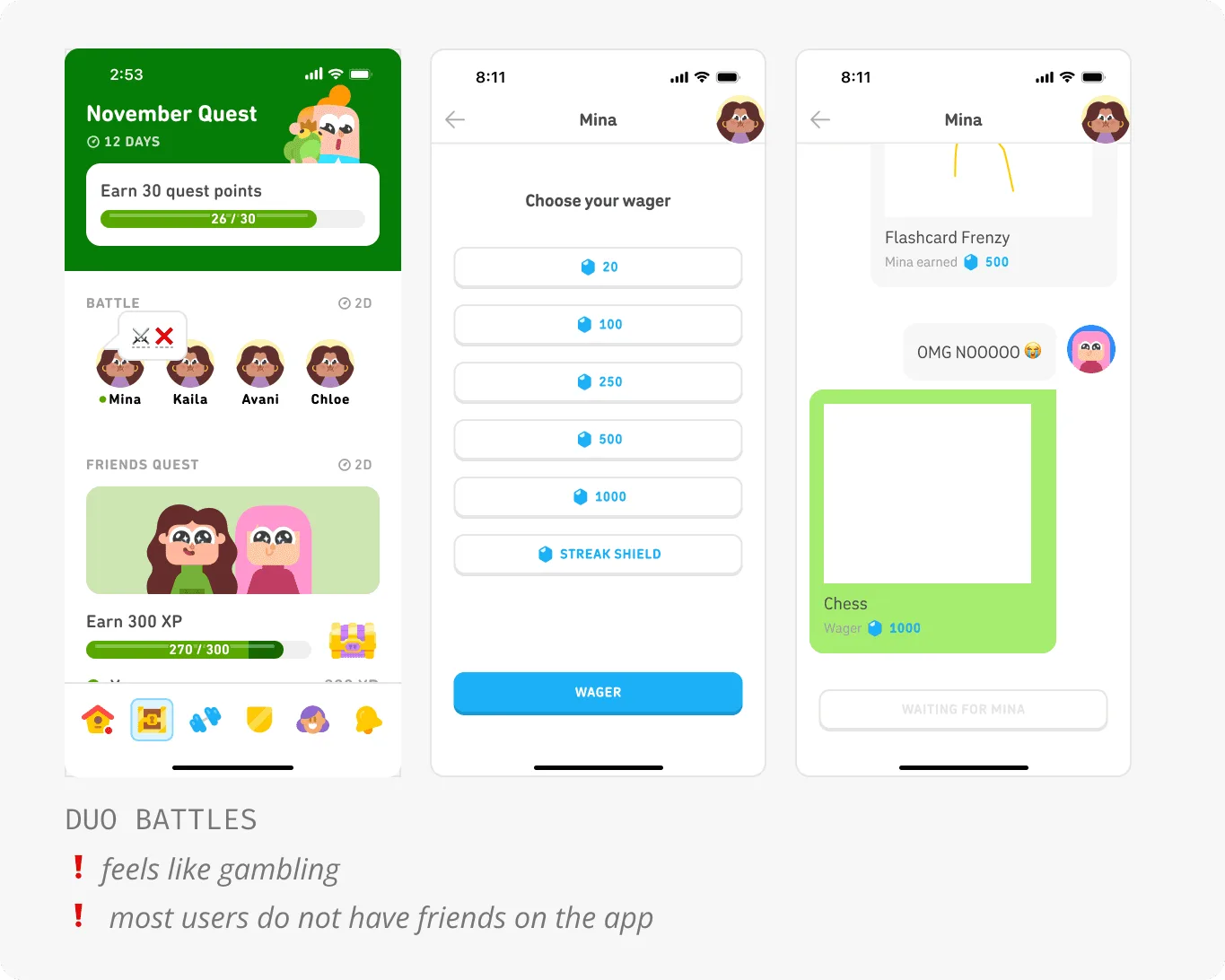
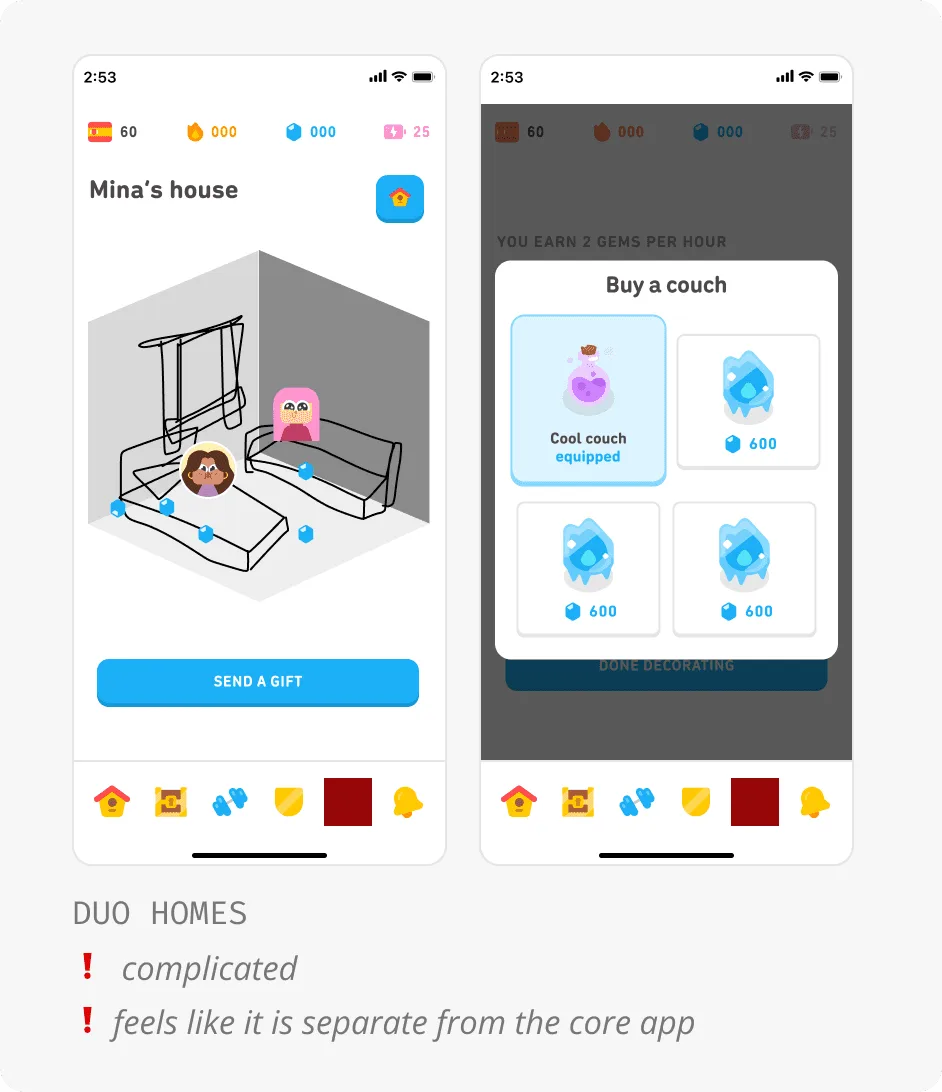
The most effective IAPs are simple.
I presented my work to Kaila and 5 other product designers. From this critique session, there were severe key themes I realized that Duolingo prioritizes.
Engagement to drive retention
IAPs should be meaningful, and easy to interact with.
Direct connection to learning
Learning progress should never be paywalled.
Monetization
IAPs must be able to create revenue for the company.
DuoHomes creates potential for lesson binging
Based on the feedback I received, DuoHomes appeared to have the most potential engagement and learning. Furthermore, DuoHomes promotes bingeability and has potential to scale with the introduction of limited time events and furniture.
ITERATION
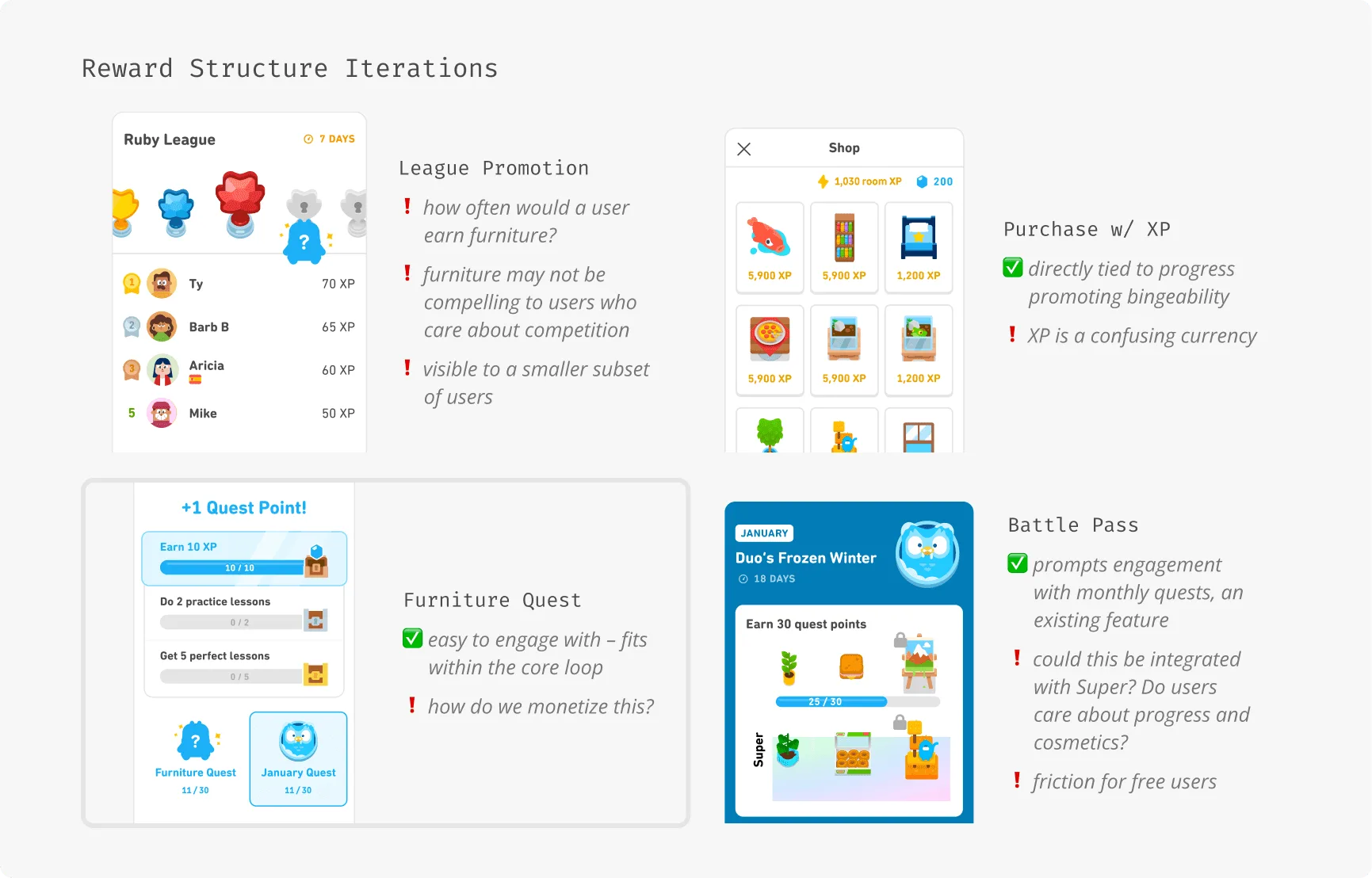
How do we incentivize participation with DuoHomes?
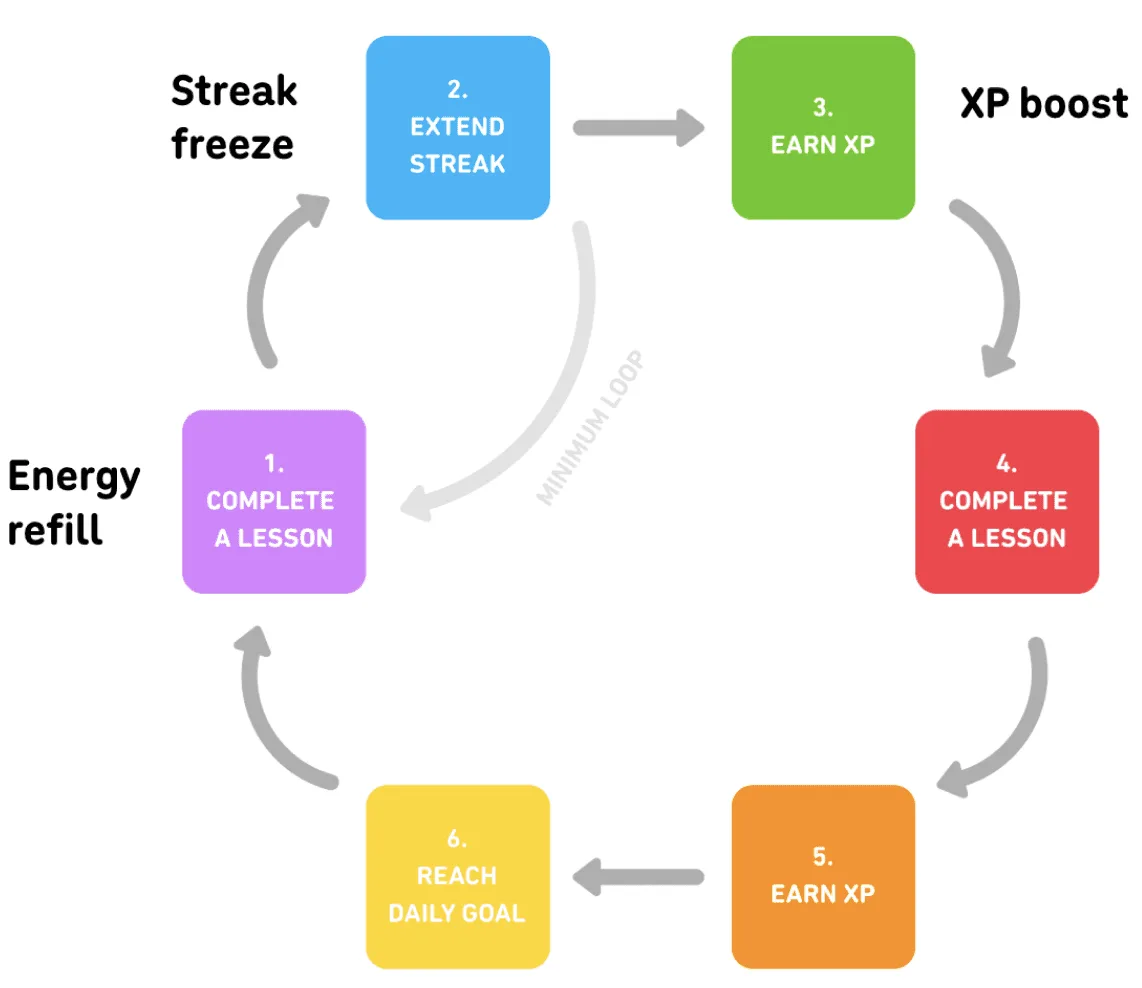
I experimented with several furniture reward mechanics, prioritizing maximizing visibility. Ultimately, I decided on furniture quests as it fit within the core loop and is thus visible to all users who complete a lesson.
I also leveraged the social aspect to encourage users to engage with homes, and look at what their friends are up to. Building on the "path" on the home screen metaphor, I incldued friends' houses on the path to create a neighbourhood.
Prompting learning & lesson binging with DuoHomes
Building upon Duolingo's existing quest points mechanic, I introduced furniture as a reward for reaching certain milestones. Most Duolingo users care most about in-game progress and protecting their streak. Through Home Quests, users are prompted to binge lessons to obtain items before the shop rotates.

What if users want a specific item?
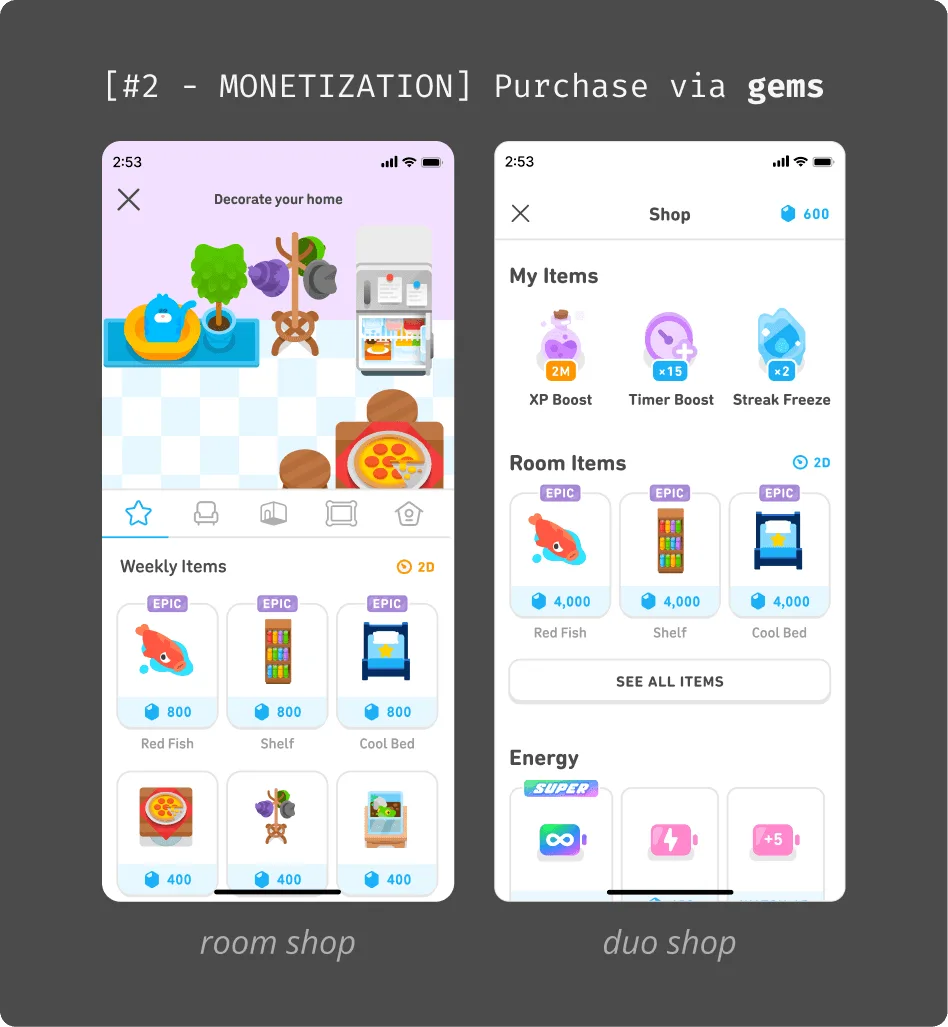
Users have the alternative route of purchasing items via gems. Using gems provides choice and saves effort compared to the furniture route method. I kept all items purchasable with gems to promote gamification and engagement with IAPs.

VISUALS
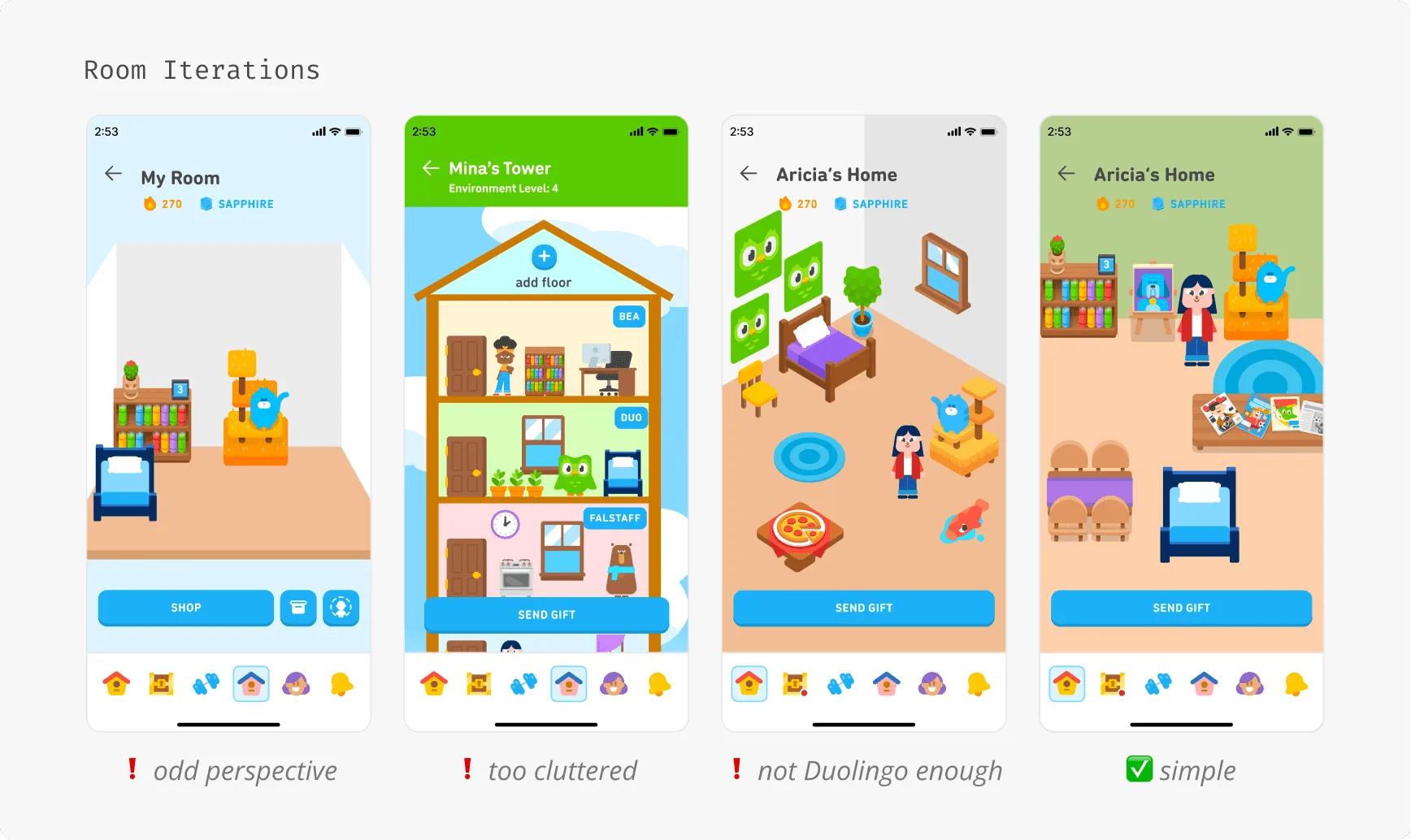
Home iterations
I explored various iterations of the room itself. I took inspiration from the original Pokémon games, and ultimately felt that a "top down perspctive" felt the most natural within the app.
Improving browsibility and retention within the shop
control
redesign
The current shop prioritizes business needs with 3 CTAs to super. Each item takes up a lot of real estate. The redesign prioritizes simplicity and efficiently communicating categories.
REFLECTION
Prioritize features with greatest impact and scope
With only 10 weeks in my internship, there were features that I would have liked to explore more, such as social interactions when visiting friends. It was important for me to clearly reflect on which features were core to the project so that I could prioritize them first.
It's important to trust yourself as a designer
Kaila once told me it's important to have firm opinions but loosely held. All feedback and critique should be heard, but does not always need to be followed. There are many tradeoffs to consider, and as the primary designer of this project, I have the most context.